Friday Story – Clement Attlee
Published by Katie Noble on
Clement Attlee
Social work in history
By Dan
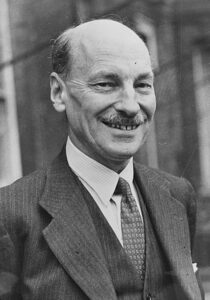
On 26th July 1945 in the shadow of World War Two, Clement Attlee was sworn in as Prime Minister of the United Kingdom. His Labour party won a landslide victory in the 1945 election, based upon their post-war recovery platform. Following World War Two, they led a country on the verge of bankruptcy beset by food, housing and resource shortages. It was not widely known that Attlee had first hand knowledge of these issues, as before his political career he had been a Social Worker.
By his own admission, Attlee’s political views were imperialist conservative which was inherited by his wealthy upbringing. It wasn’t until between 1907-1909 when he saw firsthand poverty and deprivation, whilst working with slum children, that he converted to socialism.
Either side of World War One, Attlee worked as a Social Worker and Social Work Lecturer as well as a secretary for Toynbee Hall, a place saturated with social work relevance. His experience helped shape his social reform policies whilst Prime Minister.
Attlee wrote a book on social work and highlighted his notion of ‘the social service idea’, which brings together four essential elements of social work – that it should be radical, relationship based, realistic and reciprocal.
His notion of relationship based practice is still very relevant today, and at East Sussex, is closely aligned to our Connected Practice model.